Nyctanthes arbor-tristis
Night-flowering Jasmine, Parijat, Srigading, Tree of Sorrow
A tropical shrub or small tree famous for its highly fragrant, night-blooming white flowers with vibrant orange centers that naturally drop at dawn.
Quick Stats
Overview
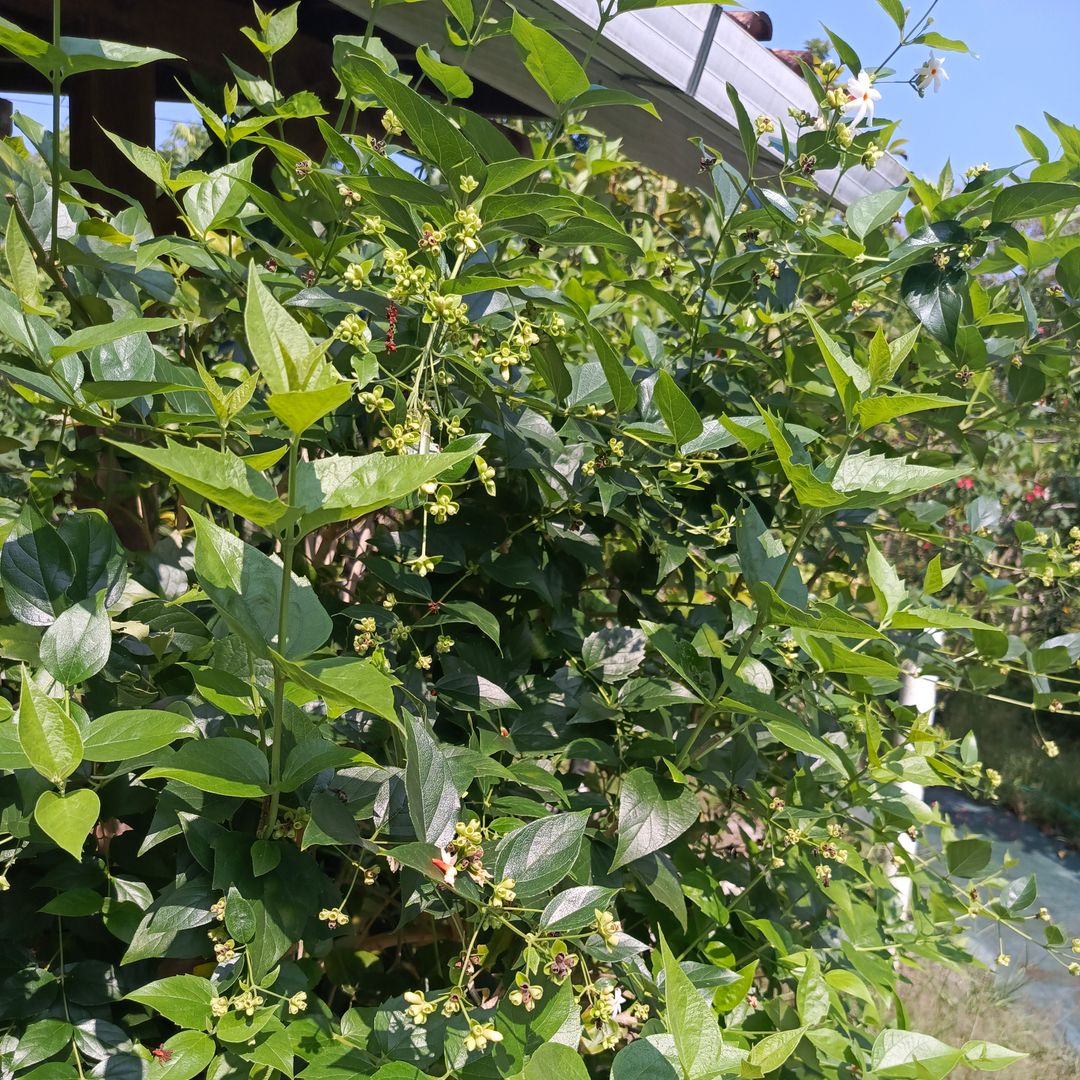
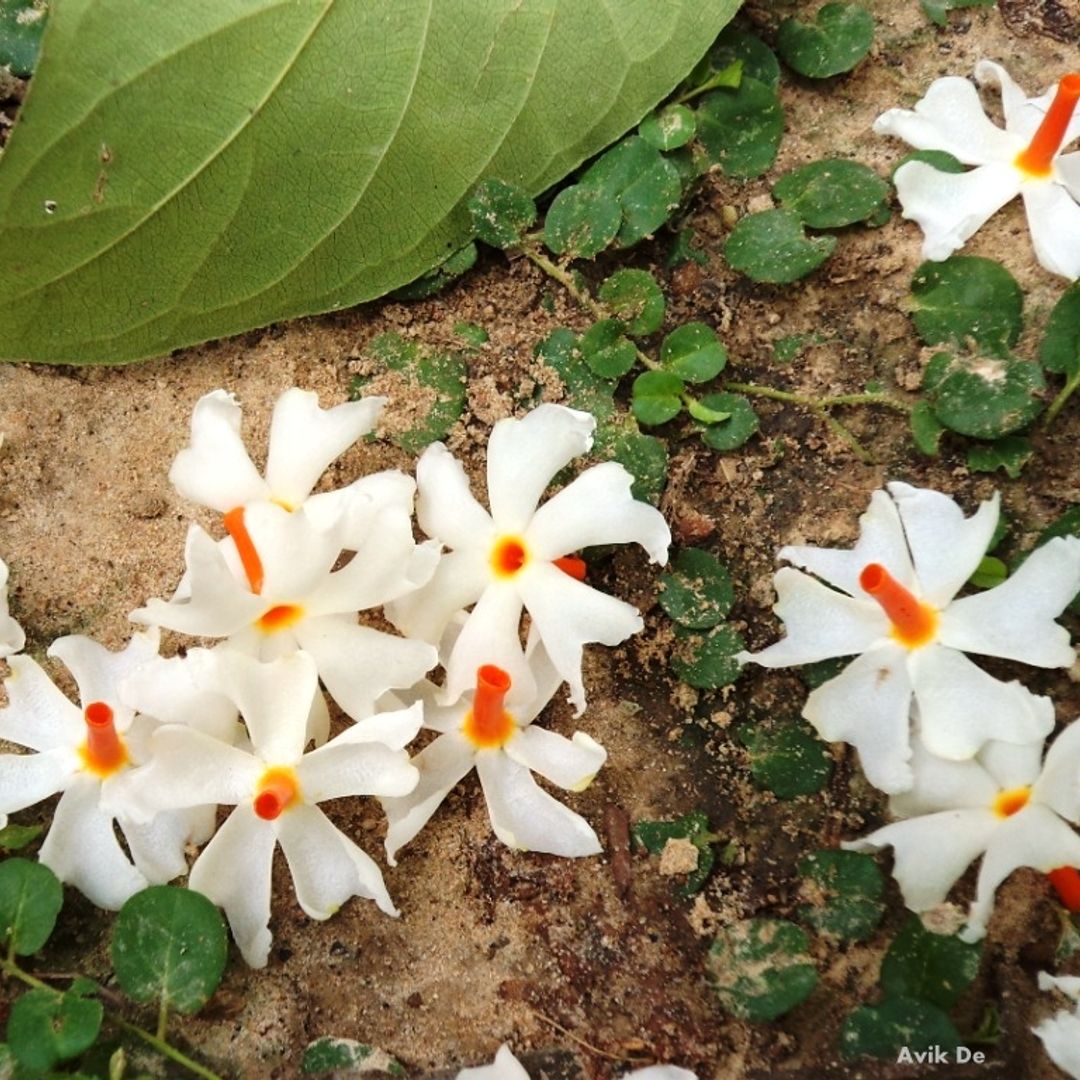
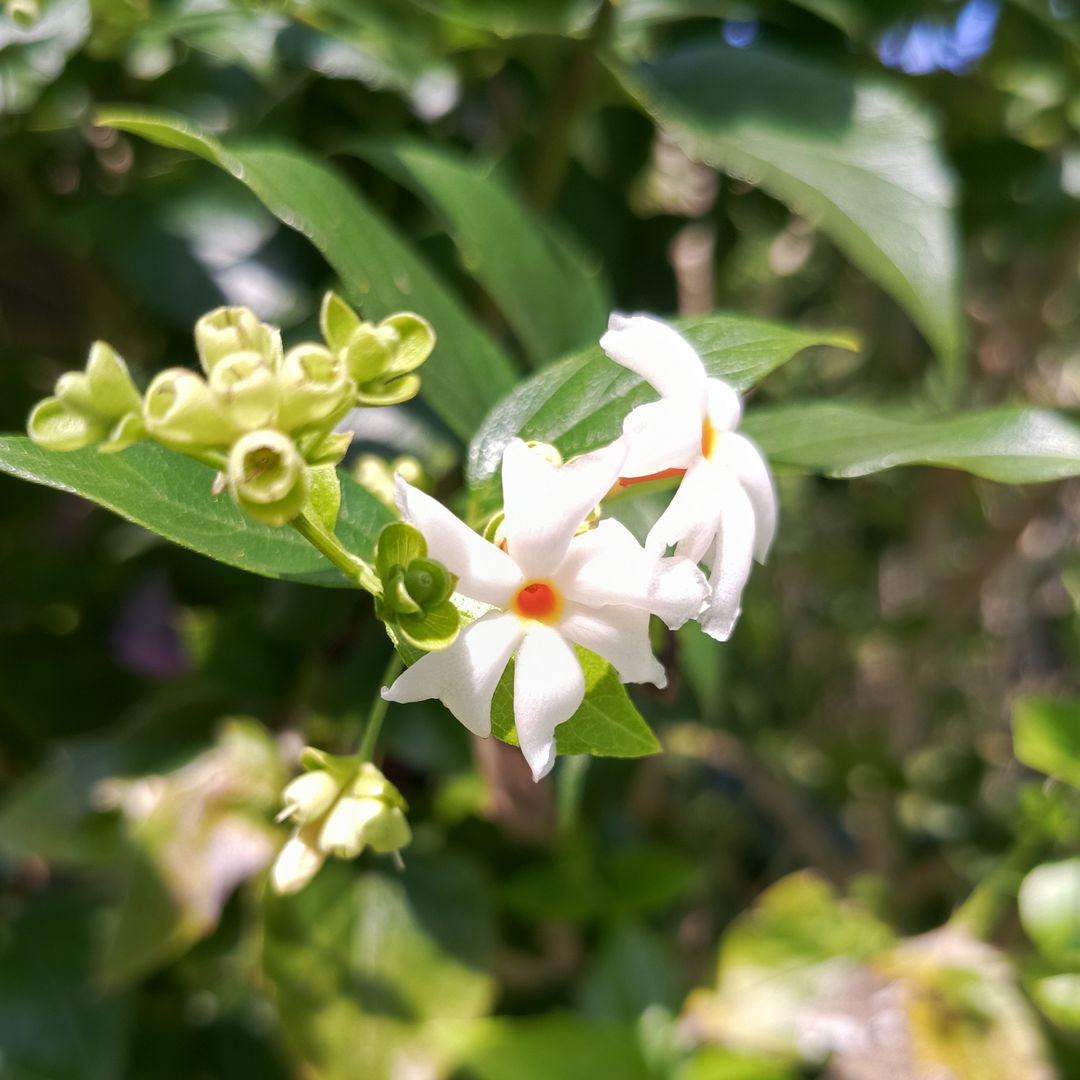
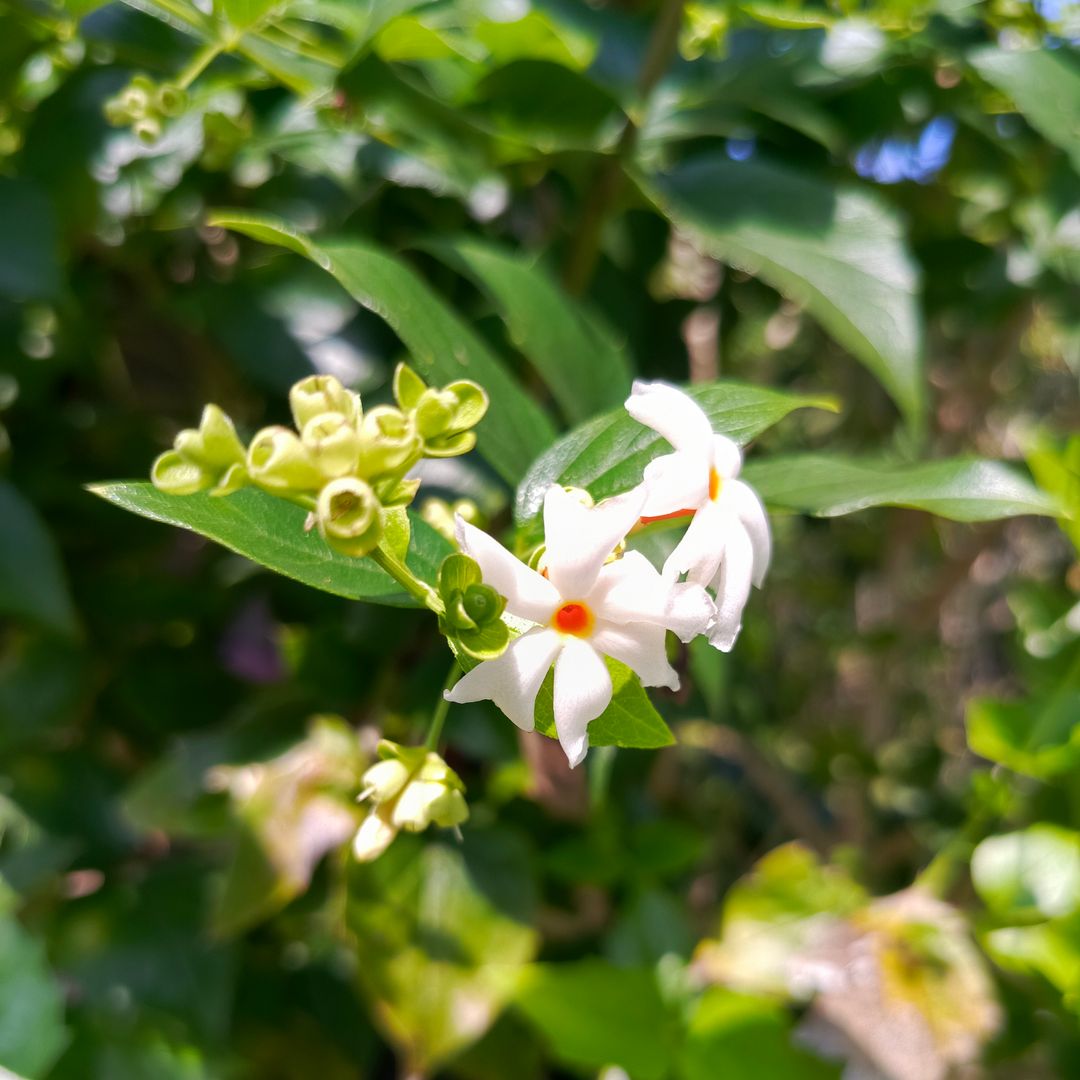
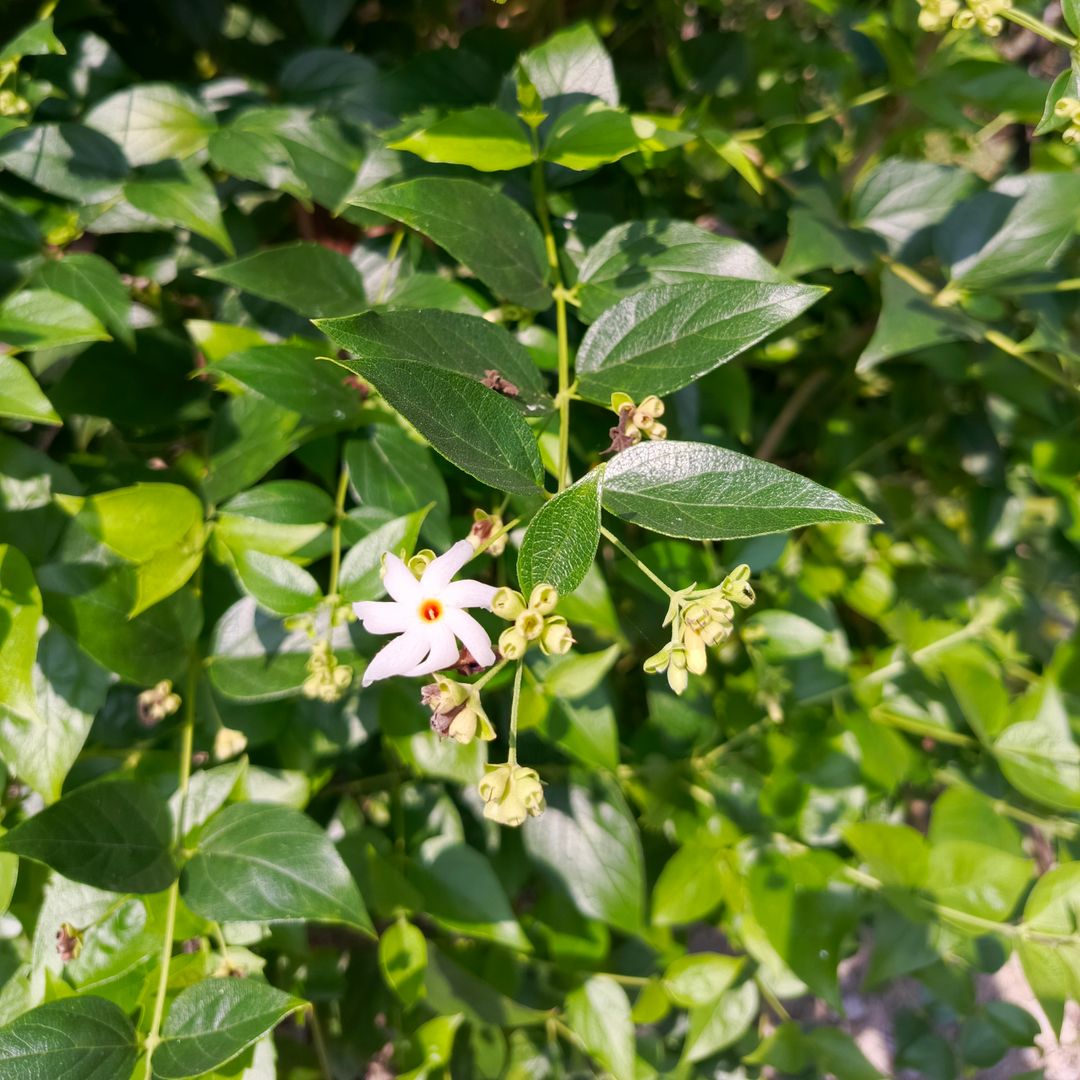
During the day, Srigading is a pretty unassuming shrub. It has rough, slightly hairy leaves, and if you didn’t know what it was, you might just walk right past it. But as the sun goes down here in Mondokan, the magic happens. It opens these delicate, star-shaped white flowers with striking orange stems, and releases a rich, sweet fragrance that floats across the entire homestead. By the time I wake up and walk out with my morning coffee, the blooming is over, and there is a beautiful, fragrant carpet of fallen flowers resting on the soil. It is a plant that truly engages your senses.
Homestead Integration
For our Bunga Aromatik nursery line, Srigading is an absolute crown jewel. People are always looking for plants that add atmosphere to their homes, and selling a plant with this kind of evening fragrance practically does the work for me.
On the homestead itself, I like to plant these along the eastern side of the house or nestled near our larger teak trees. They appreciate that dappled afternoon shade. Beyond the nursery sales, the fallen flowers are a great resource; my family gathers them in the morning to dry, and they attract an army of beneficial evening pollinators to our gardens while we sleep.
Care & Cultivation
Srigading handles our Javanese heat just fine, but like many plants out here, its biggest enemy is the peak of the rainy season. It absolutely hates sitting in waterlogged soil; the leaves will yellow and drop very quickly if its roots can’t breathe.
I always ensure the soil is deeply amended with organic matter and sand for drainage. It isn’t a particularly greedy feeder, but to get those massive, heavy flushes of fragrant flowers, I make sure to dress the base of the plant with our homestead compost and give it a healthy dose of our homemade organic fertilizer right before its main blooming cycles.
Propagation
While the plant does drop seeds, I rely entirely on semi-hardwood cuttings to multiply my stock for the nursery—it is faster and guarantees an exact clone of my most fragrant mother trees. I take a cutting about 15 to 20 centimeters long, strip the bottom leaves, and stick it into a polybag filled with a light, well-draining mix of soil and roasted rice husks (sekam bakar). I keep the polybags in a shaded, humid spot. In just a few months, they push out a solid root system and are ready to be planted out or sold.
💡 Did You Know?
The botanical name arbor-tristis literally translates to “tree of sorrow.” It earned that slightly melancholic name because the tree appears to “weep” its flowers onto the ground every single morning. But those fallen flowers aren’t a waste! For centuries, the bright orange floral tubes have been harvested across Asia to create a gorgeous, natural yellow-orange dye for fabrics, including the traditional robes worn by Buddhist monks.
🛠️ Pro-Tip
This plant naturally wants to grow into a leggy, sprawling, and somewhat messy tree. If you just let it go, all your flowers will end up way up high, out of sight and out of reach. Don’t be afraid to give your Srigading a hard, structural prune right after its main flowering cycle finishes. Trimming those long branches back forces the plant to push out dense, bushy lateral growth. That means a tidier plant, easier access to the flowers, and double the blooming sites for the next season.
Video
Gallery