Carica Papaya
Papaya, Pawpaw, Kates, Pepaya
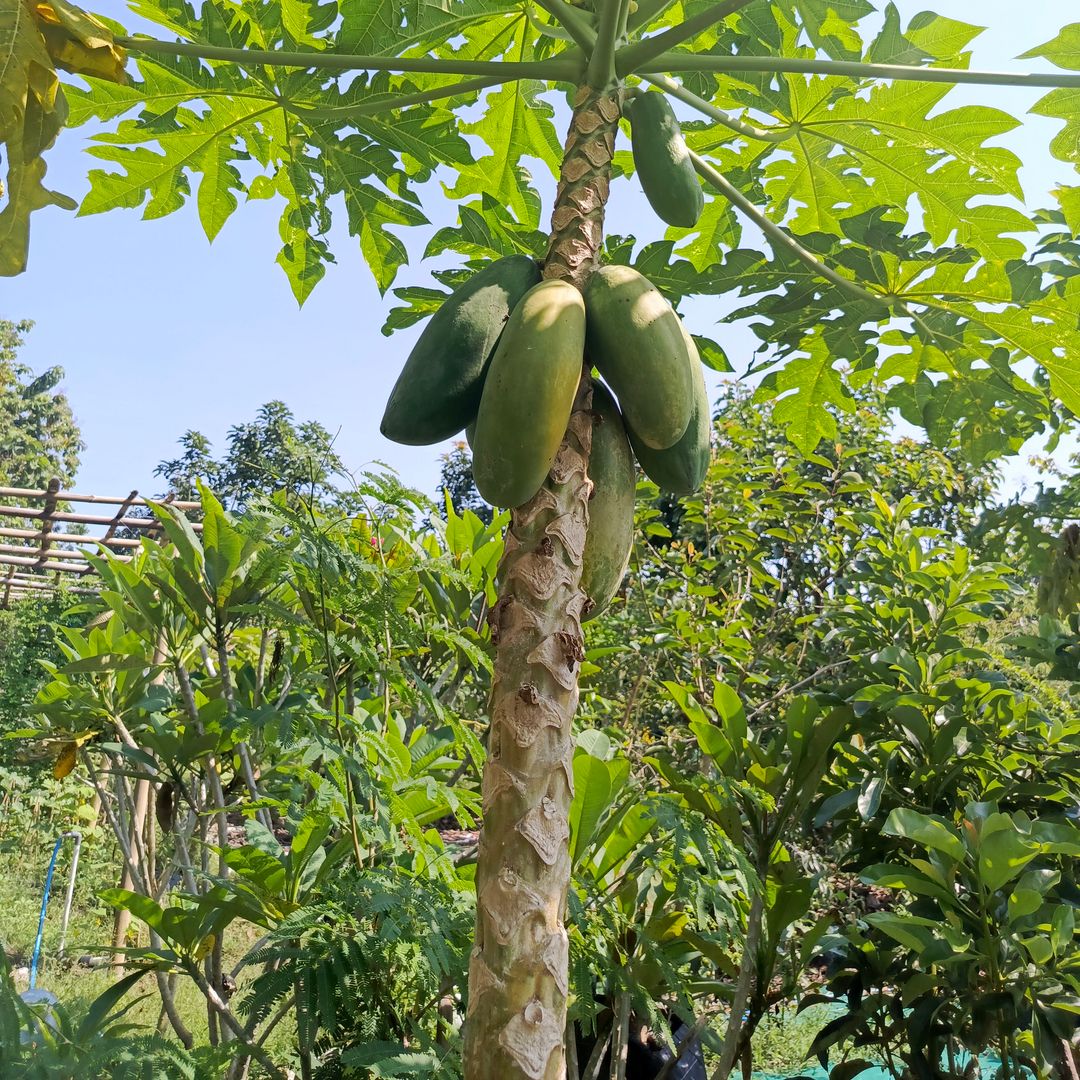
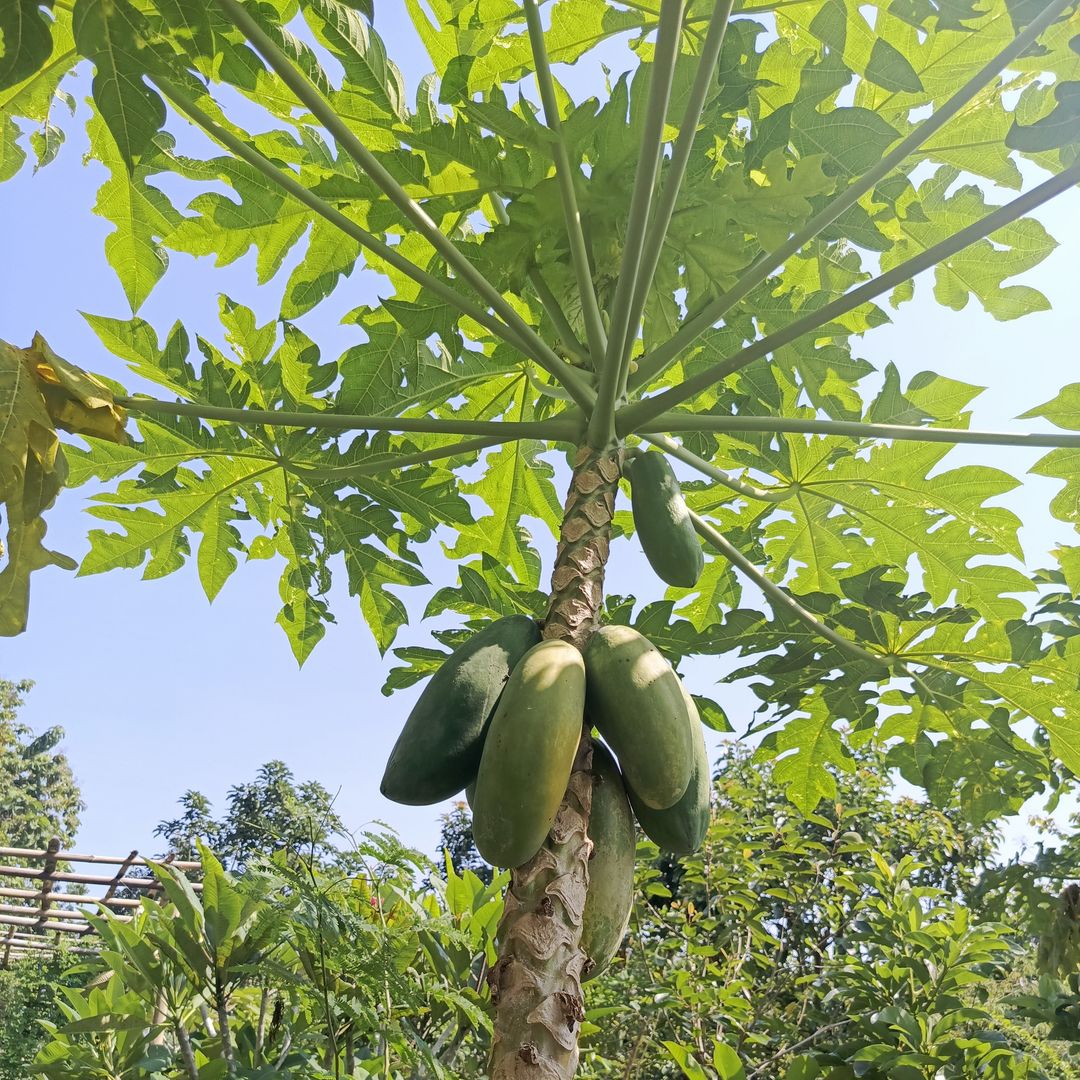
A fast-growing tropical fruit plant with a hollow, unbranched trunk and a crown of deeply lobed leaves, producing large, sweet fruits.
Quick Stats
Overview
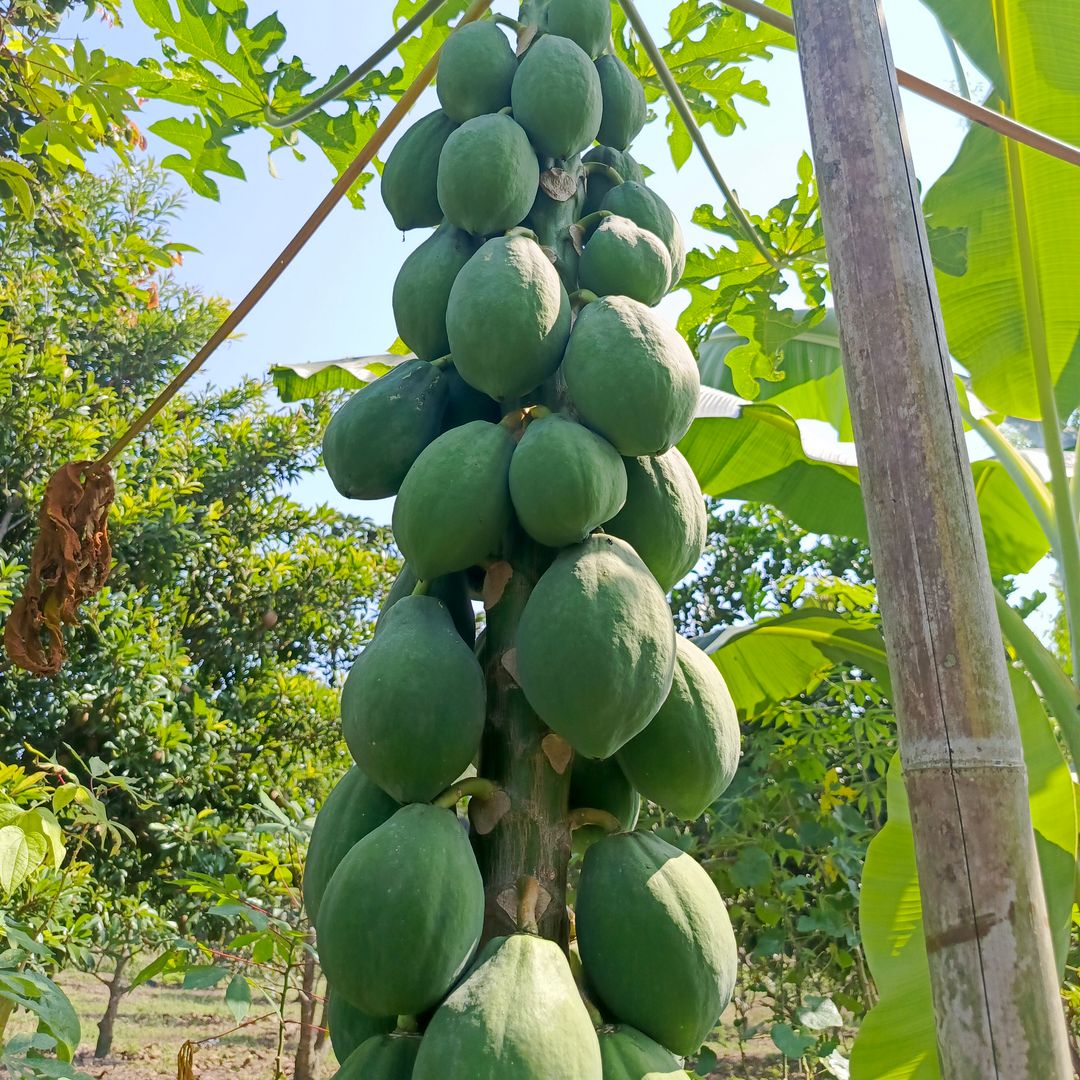
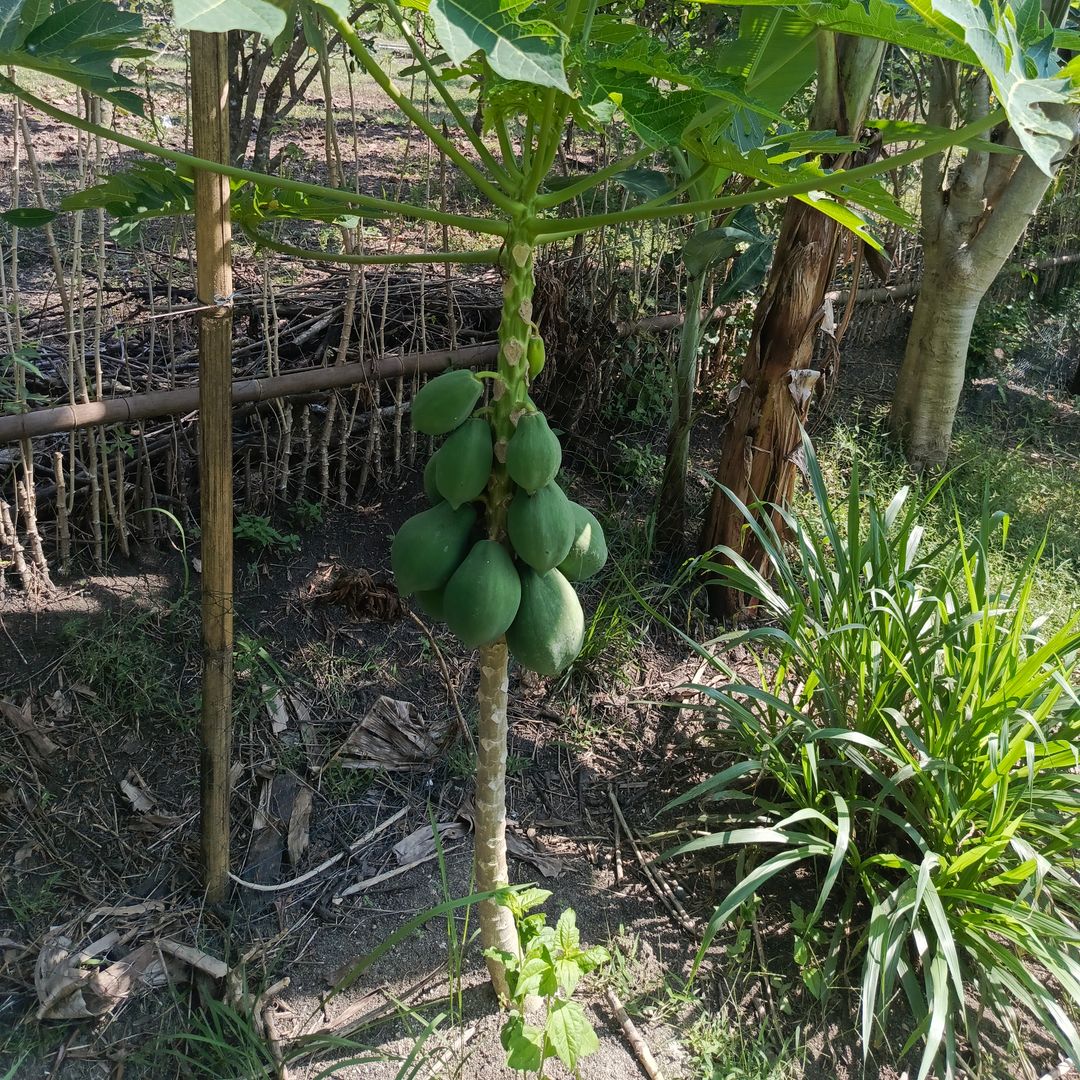
Even though it looks like a tree, papaya is actually classified as a giant herbaceous plant. It has a soft, spongy trunk with a hollow center, meaning it grows at a breakneck pace compared to true hardwoods. Within a year, a tiny seed transforms into a towering plant bearing heavy clusters of fruit right off the main stem. It is an incredibly generous plant, giving us food practically year-round once it starts producing. The broad, umbrella-like leaves give a beautiful, tropical feel to the homestead, but it’s the sheer volume of food it produces that earns its keep.
Homestead Integration
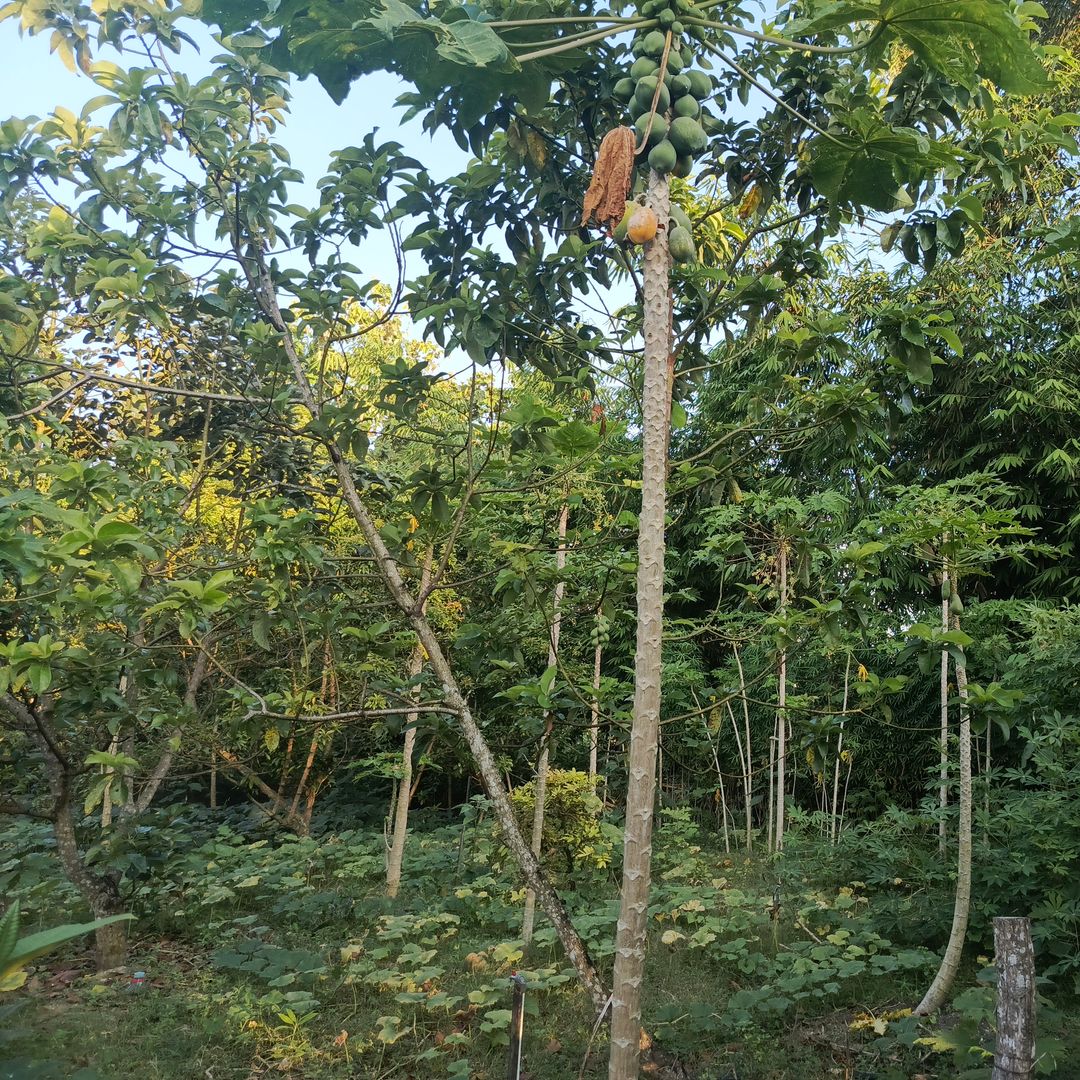
At Batuah Homestead, the papaya is a true multi-purpose crop. The ripe, orange fruit is our go-to breakfast, but the unripe, green fruit is just as valuable—we shred it for oseng kates (stir-fry) or use it in salads.
But its utility goes way beyond human food. The bitter leaves are phenomenal forage for goats and chickens, acting as a mild, natural dewormer for the livestock.
When a papaya plant gets too old or blows over in a storm, I chop up the water-logged, spongy trunk and toss it into the compost or directly into garden beds. It breaks down incredibly fast, acting like a giant water-retaining sponge for the soil while it decomposes.
Care & Cultivation
Papayas are heavy feeders, but they have one massive weakness: root rot. They absolutely cannot stand having “wet feet.” Here in Mondokan, the rainy season can be brutal, so I always plant my papayas on a slight mound of earth to ensure excellent drainage. They want full, baking sun and a lot of nutrients to produce big, sweet fruits.
Since we run a natural farming setup, I feed them heavily with aged goat manure and give them regular soil drenches of our homemade organic fertilizer—often made from our own overripe papayas and bananas—to push that potassium right back into the fruiting cycle.
Propagation
You will be starting these from seed. The trick is getting seeds from a “hermaphrodite” fruit (usually the elongated, oval-shaped papayas, rather than the perfectly round ones, which tend to be female). When you scoop the black seeds out, you will notice they are enclosed in a little squishy, gelatinous sac (the aril). You need to break that sac. I put the seeds in a sieve and gently rub them against the mesh under running water until that gel washes away. If you don’t do this, the gel inhibits germination and invites fungus. Once clean, dry them in the shade for a day, pop them into seedling bags, and they will sprout in a couple of weeks.
💡 Did You Know?
The papaya plant is packed with a powerful natural enzyme called papain, which breaks down tough protein fibers. For generations, people here have used papaya leaves as a natural meat tenderizer. If we are cooking up an older, tougher free-range chicken or some goat meat, we just wrap the raw meat tightly in bruised papaya leaves for a few hours before cooking. The enzymes go to work, and the meat comes out incredibly tender.
🛠️ Pro-Tip
Because they grow so fast, papayas eventually get too tall to harvest safely, and they become prime targets to snap in heavy winds. You don’t have to cut the whole tree down when this happens. You can actually “decapitate” a mature papaya tree. Take a machete, chop the trunk off at about chest height, and then—this is the important part—strap an inverted tin can or a thick plastic bag over the exposed, hollow stump. This stops rain from filling the trunk and rotting it from the inside out. Within a few weeks, the stump will push out multiple new side branches, giving you a bushier, easy-to-reach tree.
Video
Gallery