Clitoria ternatea
Butterfly Pea, Bunga Telang
A vigorous, climbing tropical vine famous for its brilliant, deep sapphire-blue flowers that are traditionally used as a natural dye and herbal tea.
Quick Stats
Overview
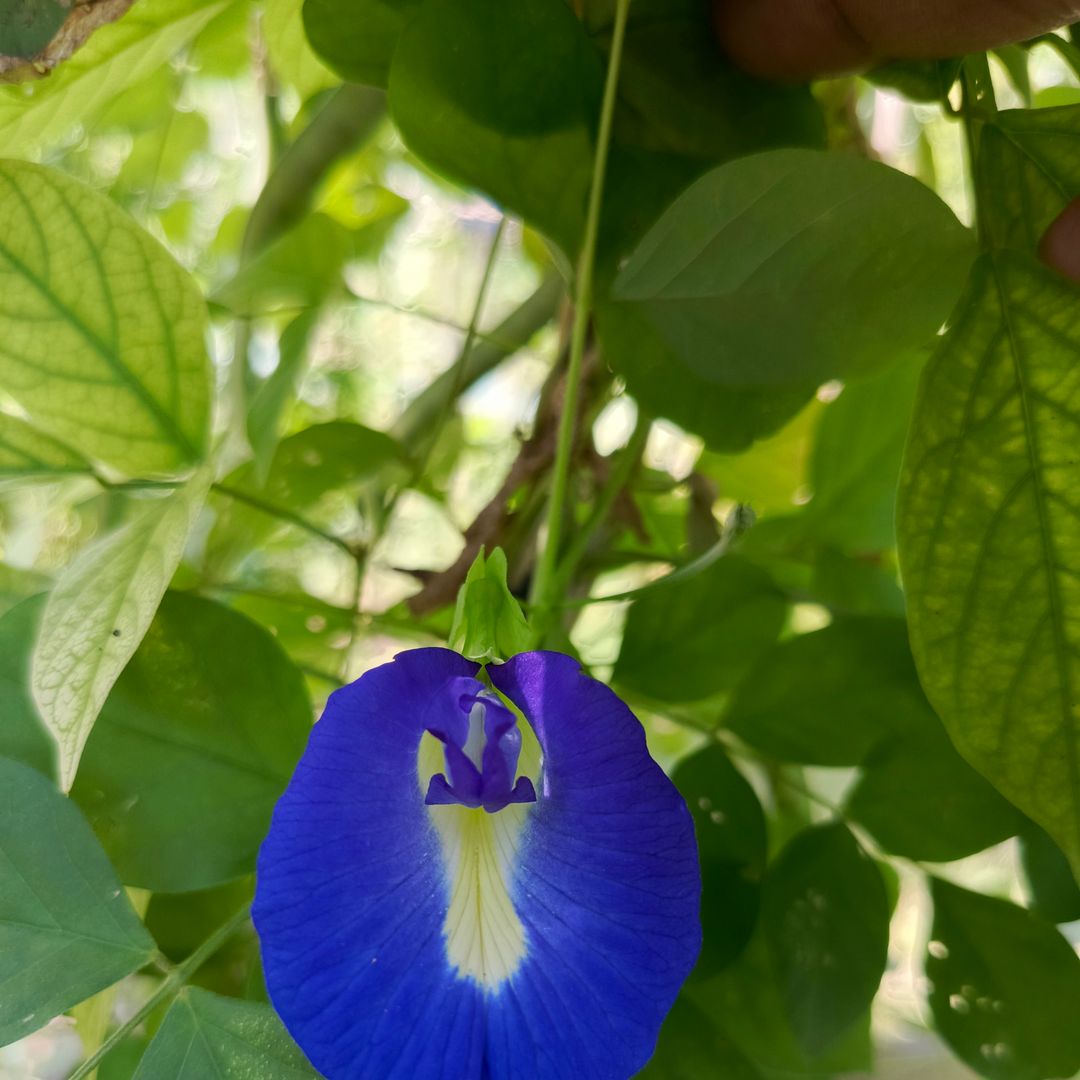
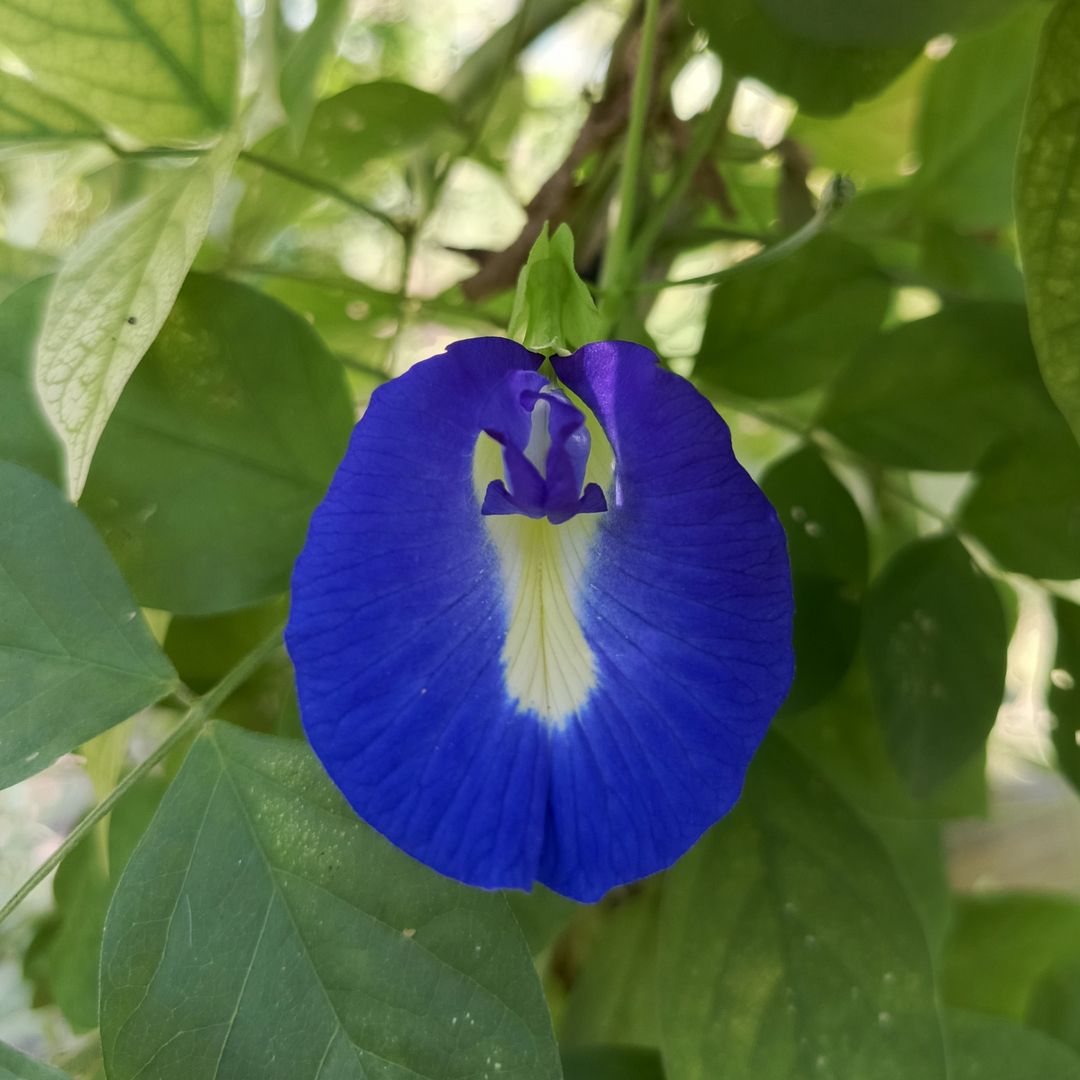
Walk around almost any village in Java, and you will likely spot the striking blue flowers of Bunga Telang draped over a fence. It is a wildly fast-growing, twining vine with neat, oval-shaped leaves and delicate flowers that look a bit like a butterfly in flight. Visually, it is stunning—that deep, vibrant blue is quite rare in the plant world. But beyond its looks, it is a tough, resilient plant that thrives in our hot, humid climate. It grows fast, flowers prolifically, and asks for almost nothing in return.
Homestead Integration
Bunga Telang is a powerhouse for us on the homestead. Aesthetically and commercially, it is a flagship for our Bunga Aromatik brand; the dried flowers sell wonderfully for herbal teas.
Agriculturally, it plays the same role as the Winged Bean. Because it is a legume, it fixes atmospheric nitrogen into the soil, quietly improving the earth wherever I plant it.
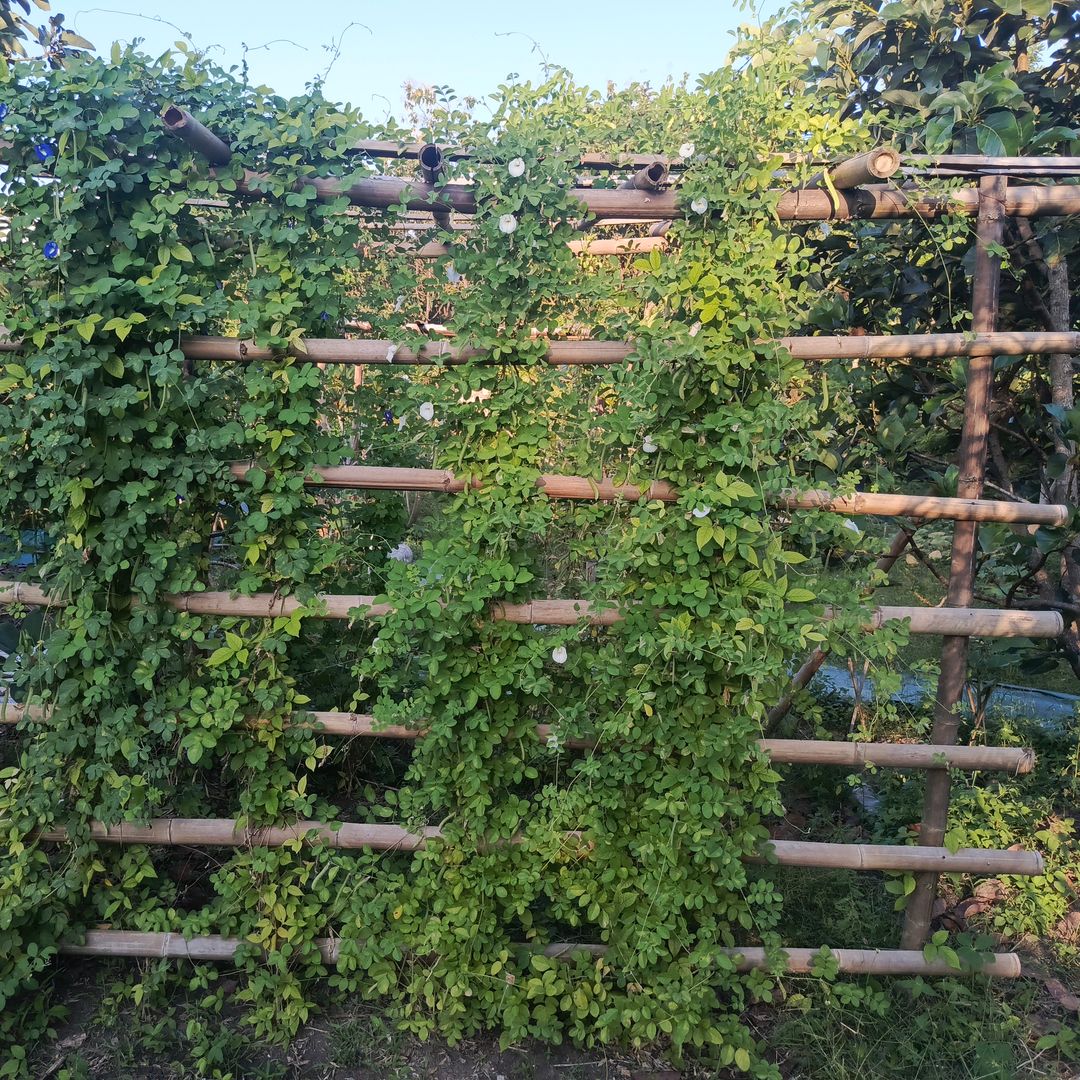
I love letting it scramble up the fences around the vegetable plots. It acts as a beautiful windbreak, feeds the soil, and when it inevitably grows out of bounds, the excess vines make highly nutritious, protein-rich forage for livestock.
Care & Cultivation
Growing this plant is honestly harder to stop than it is to start. It handles the baking Mondokan sun without breaking a sweat, provided it has a decent trellis, bamboo pole, or fence to climb. It hates having “wet feet,” so well-draining soil is a must.
Once established, it is remarkably drought-tolerant, though giving it regular water will keep the flower production high. Because it fixes its own nitrogen, you really don’t need to fertilize it. A little compost when planting, or a light spray of our homemade organic fertilizer when it’s young, is more than enough to get it roaring.
Propagation
Seeds are the way to go here, and the plant will give you plenty of them. After the flower fades, it produces a flat green pod that looks like a miniature snow pea. Leave a few of these pods on the vine until they turn brown and dry out completely. Crack them open, and you’ll find a row of small, hard black seeds. You can soak them in water for a few hours to speed things up, but I usually just poke a hole in the dirt next to a fence, drop a seed in, and cover it. They germinate reliably within a week or so.
💡 Did You Know?
The flowers contain high levels of a potent antioxidant called anthocyanin, which is what gives them that incredible blue color. But the real magic trick is its pH sensitivity. If you brew a cup of blue Telang tea and then squeeze in a few drops of lime or lemon juice, the change in acidity instantly shifts the color of the drink from deep blue to a vibrant, glowing magenta. It is a brilliant, all-natural party trick that never gets old.
🛠️ Pro-Tip
To keep your Bunga Telang blooming heavily, you need to be disciplined about harvesting. Pluck the open flowers every single morning. If you leave the flowers on the vine to form seed pods, the plant thinks its job is done and will drastically slow down new flower production. When drying your harvested flowers for tea, always dry them in the shade or on a mesh screen indoors. Blasting them in direct sunlight will bleach out that beautiful blue pigment, leaving you with pale, dull flowers instead of that premium, vibrant sapphire color.
Video
Gallery